📍 Duration / Institution
Jan - May 2025, University of Pittsburgh
⭐Tags
Thermal Testing
Experimental Design
Instrumentation
Natural Convection Test System Development
⭐ Situation + Task
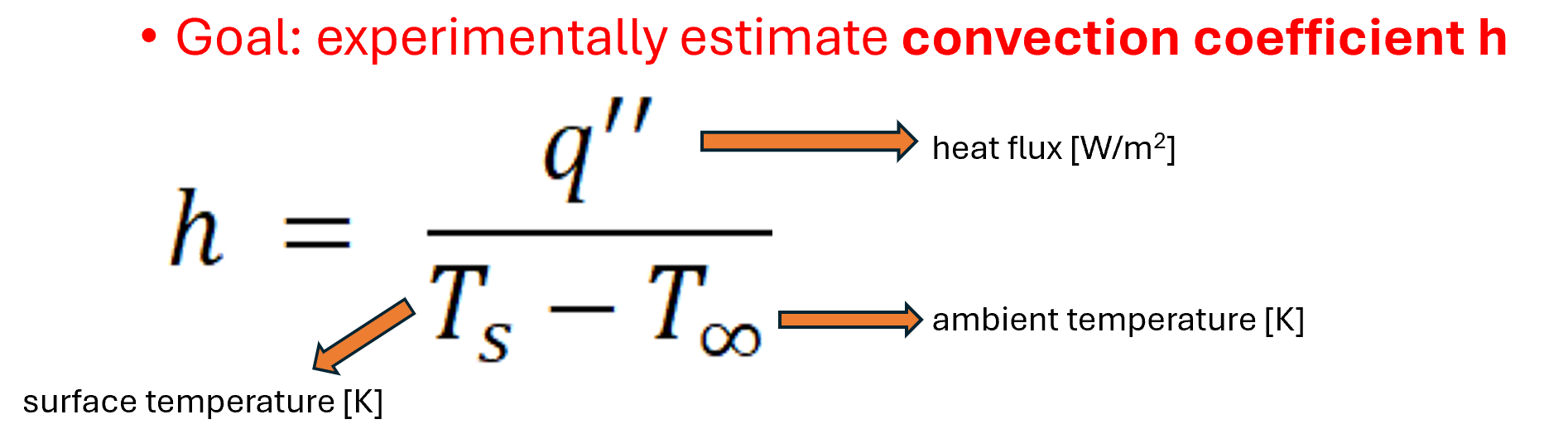
Natural convection coefficients are commonly estimated using simplified empirical correlations, but experimental validation requires accurate measurement of surface temperature, ambient temperature, and heat flux under controlled conditions. The project focused on developing a repeatable testing procedure and instrumentation system to characterize natural convection from a heated flat plate while minimizing measurement uncertainty.
⚙️ Action
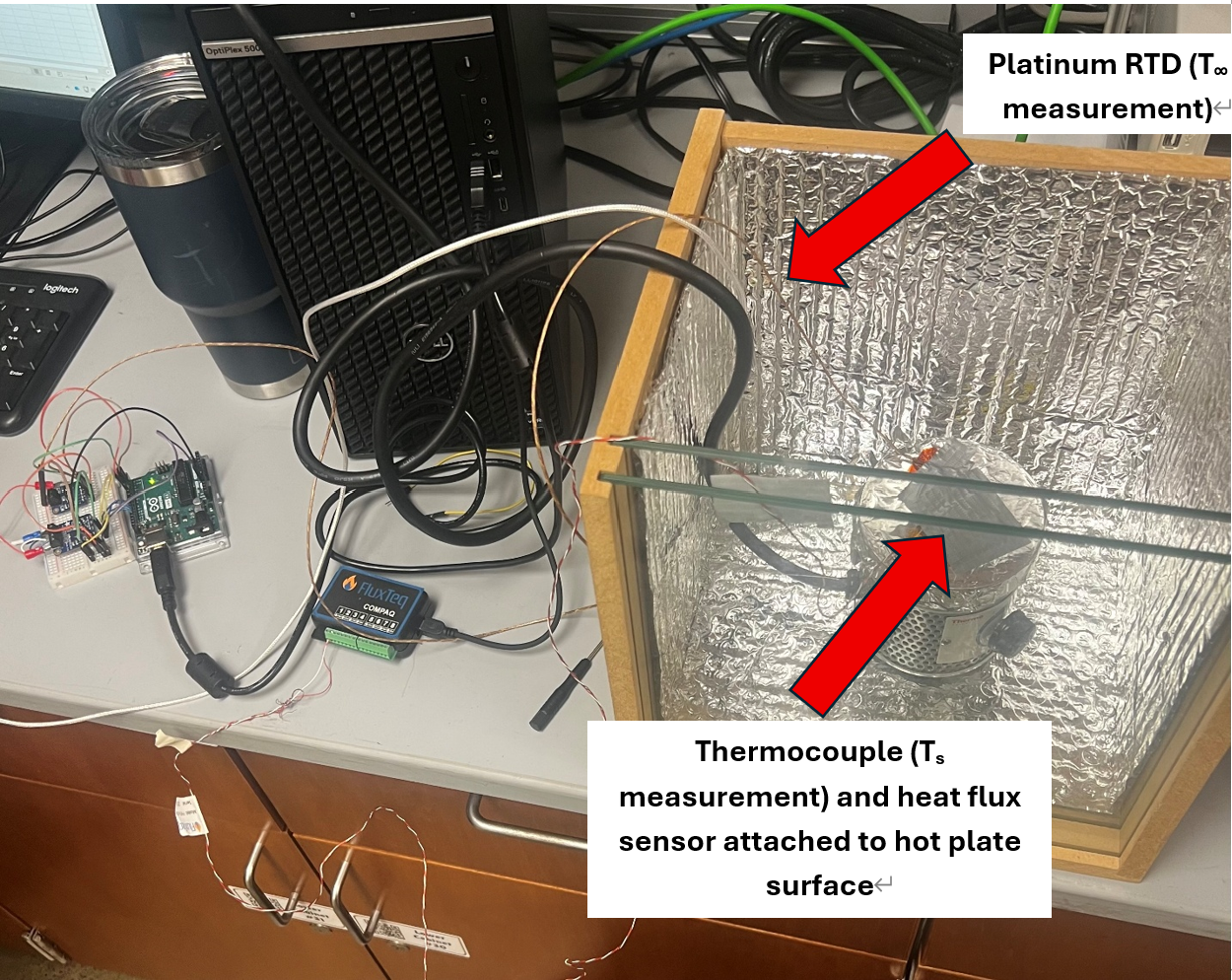
Built the experimental test bay by assembling an insulated enclosure, integrating sensors, and completing wiring for synchronized thermal measurements.
Developed a full-factorial Design of Experiments (DOE) to evaluate the effects of surface temperature, enclosure size, and plate orientation on convection performance.
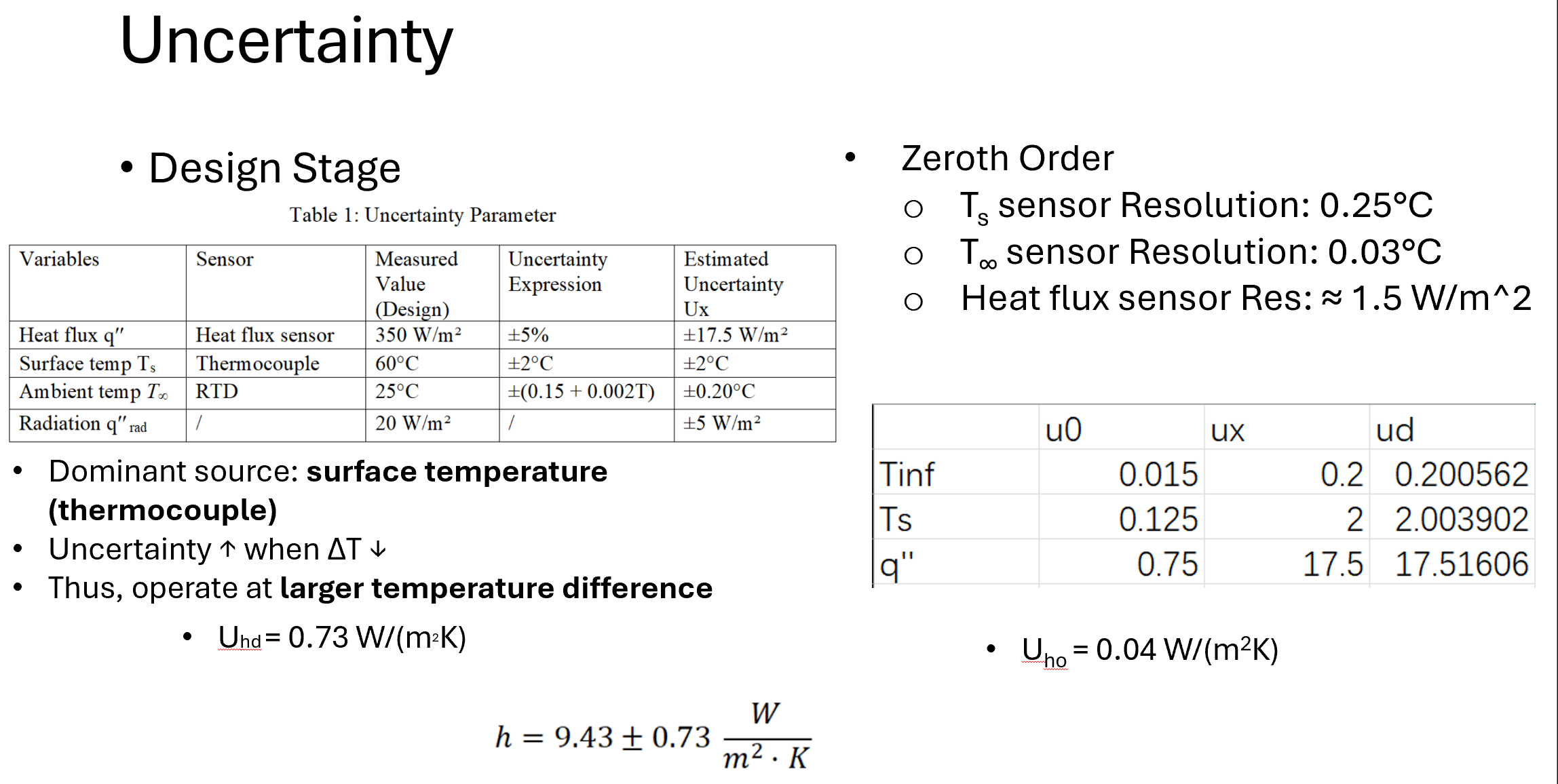
Performed design-stage uncertainty analysis to quantify measurement uncertainty and improve the reliability.
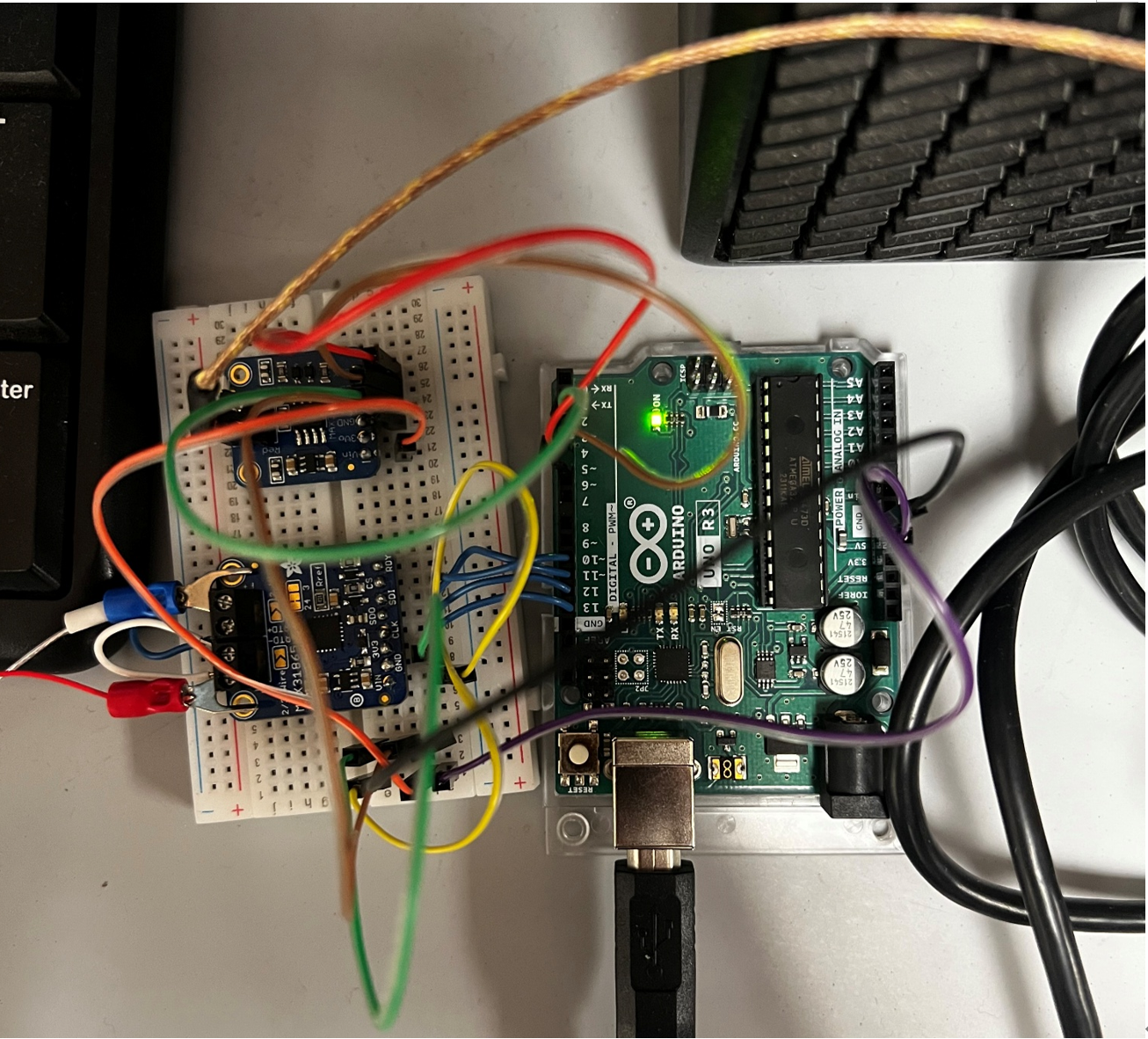
Developed sensor wiring, calibration, and synchronized data acquisition workflows using Arduino, MAX31865, and FluxDAQ to collect temperature and heat flux measurements.
📈 Result
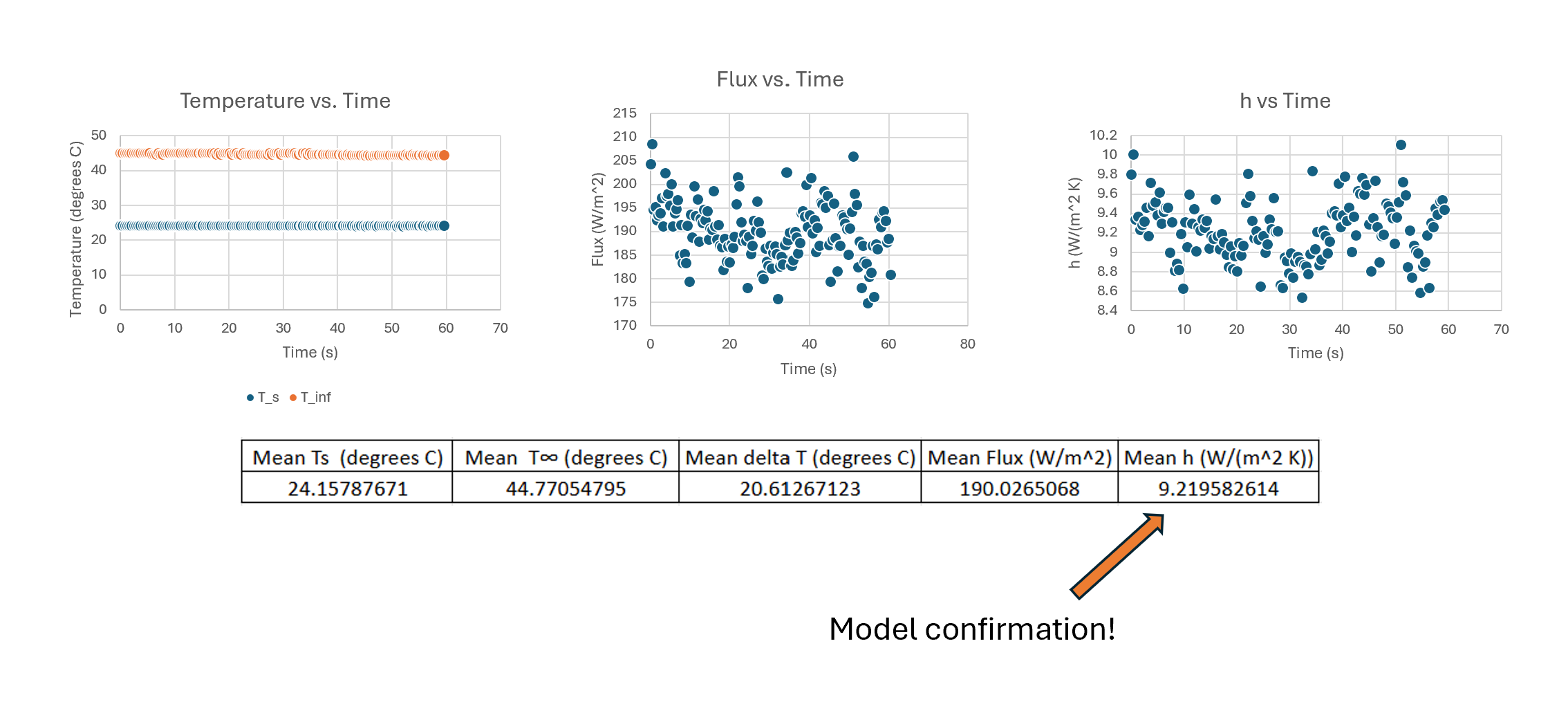
Delivered a comprehensive laboratory testing procedure, experimental setup documentation, and data analysis workflow for natural convection characterization.
Established standardized calibration and validation methods to improve measurement repeatability and comparison across test conditions.
Produced a DOE framework enabling systematic evaluation of key thermal parameters and their interaction effects.