
Strainer Redesign
📍 Duration / Institution
Sep – Dec 2025, University of Pittsburgh
⭐Tags
Human Factors Engineering
Ergonomic Product Design
User Safety & Usability
⭐ Situation + Task
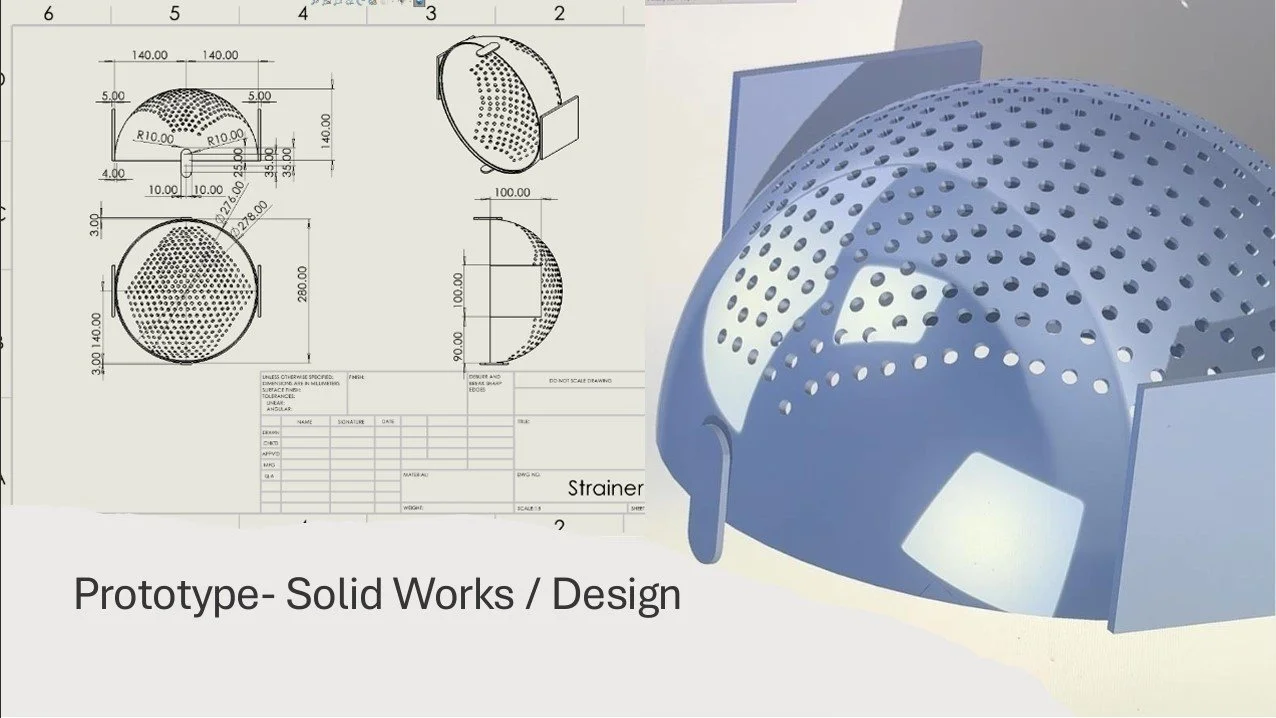
This project focused on redesigning a clip-on pot strainer to improve safety, comfort, and usability during boiling-water drainage. Existing designs often expose users to steam burns, awkward wrist postures, poor grip stability, and food spillage. Using human factors principles, task analysis, and ergonomic data, the project aimed to deliver a safer and more intuitive design without adding significant manufacturing complexity.
⚙️ Action
Performed hierarchical task analysis (HTA) to identify ergonomic risks, including wrist deviation, grip force, steam exposure, and user error.
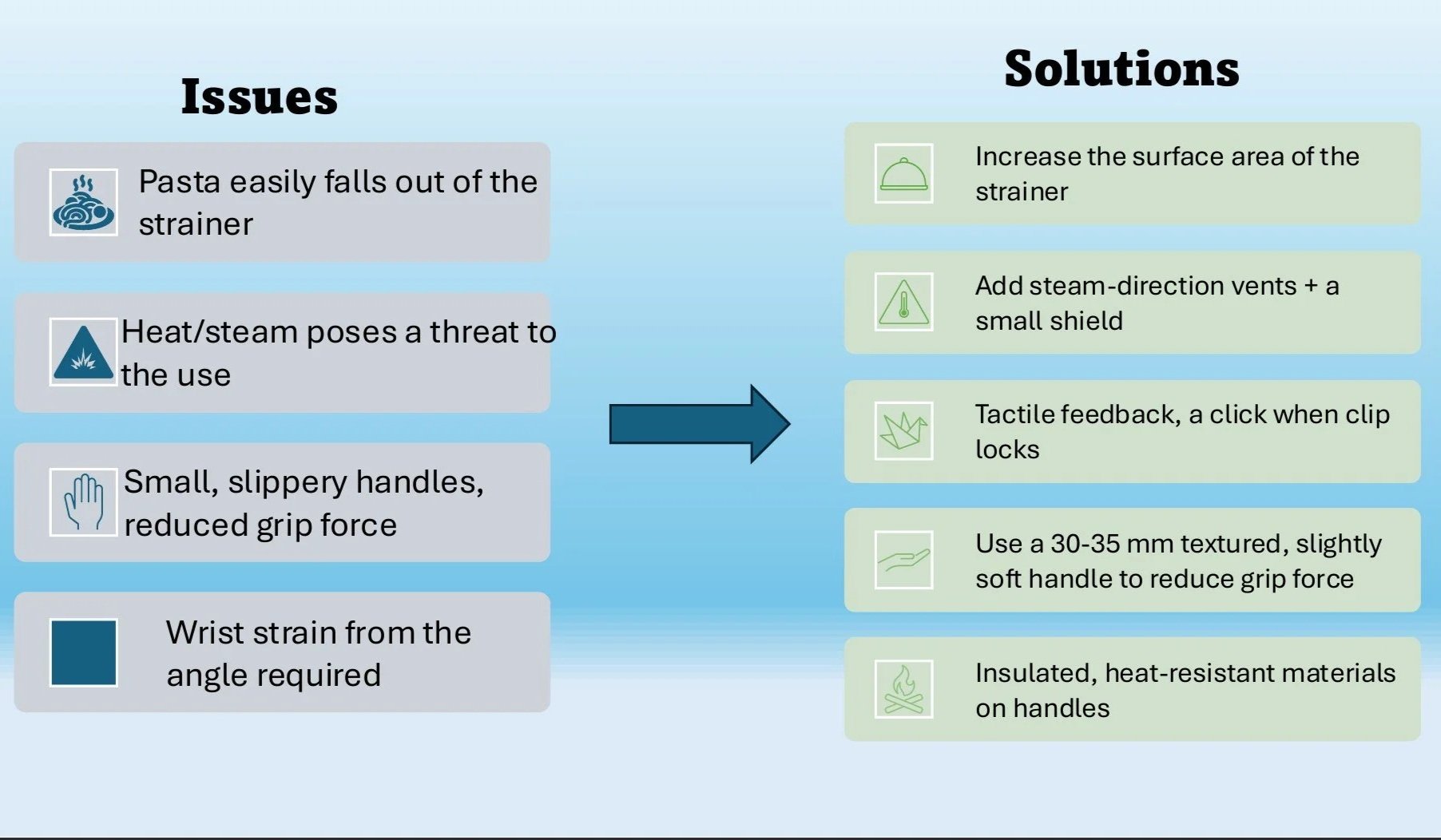
Applied anthropometric data and human factors guidelines to redesign handle geometry and features to accommodate a wider range of hand sizes and strength levels.
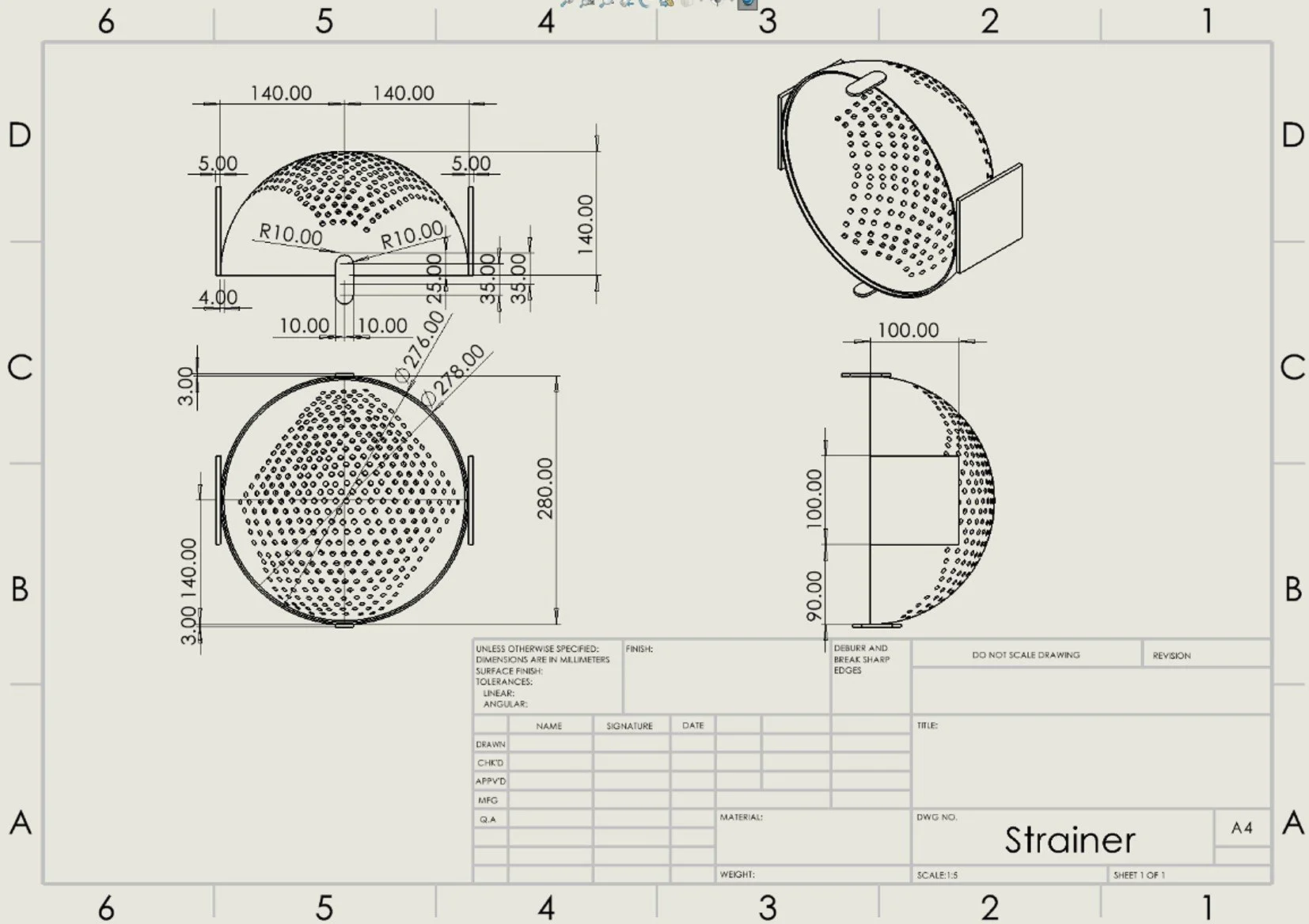
Developed a redesigned strainer concept with full-circumference coverage, steam guards, secure clips, and optional insulated handle covers, improving safety and control during use.
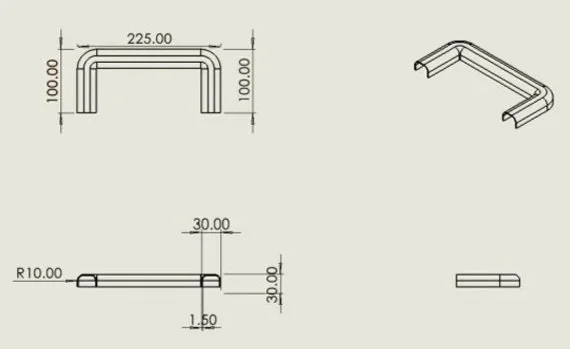
Delivered a user-centered engineering redesign supported by CAD drawings and specifications, demonstrating how HFE principles translate into practical product improvements.
📈 Result
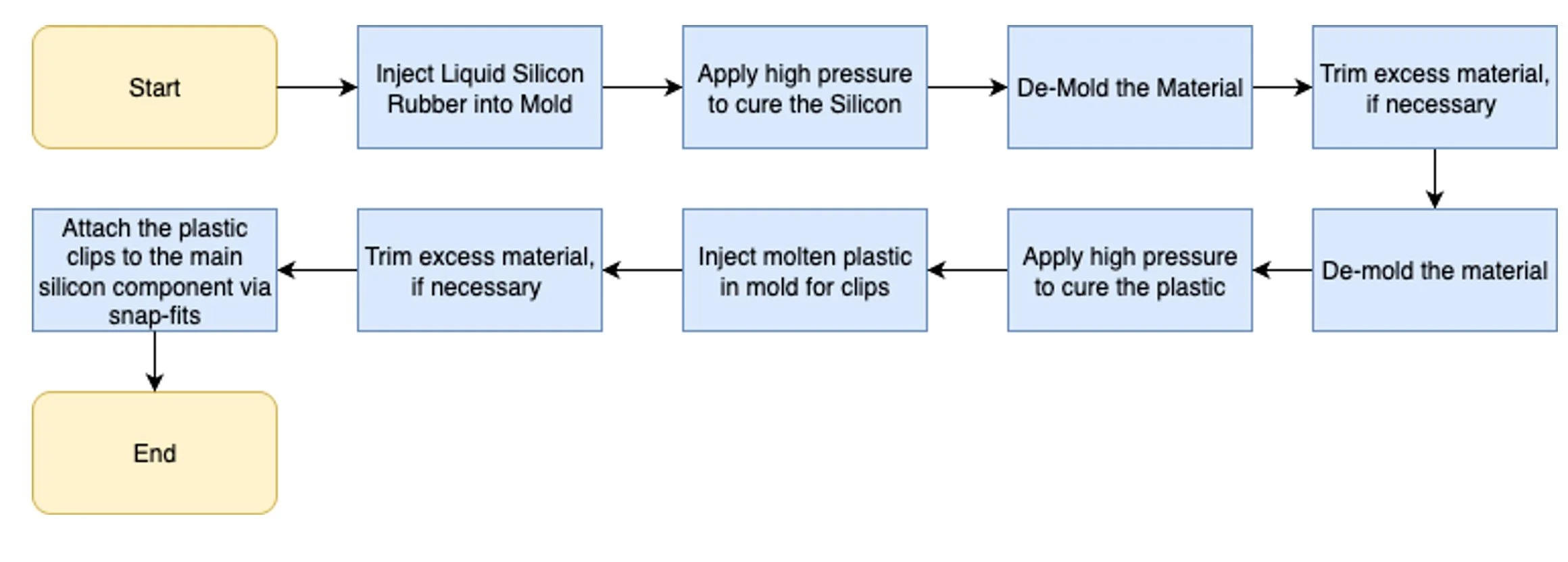
Produced a user-centered strainer redesign that reduces burn risk, wrist strain, and user error while remaining feasible for mass production.
The final concept demonstrates how human factors engineering and mechanical design can be integrated to improve everyday products through safer interaction, clearer feedback, and reduced physical and cognitive demands.